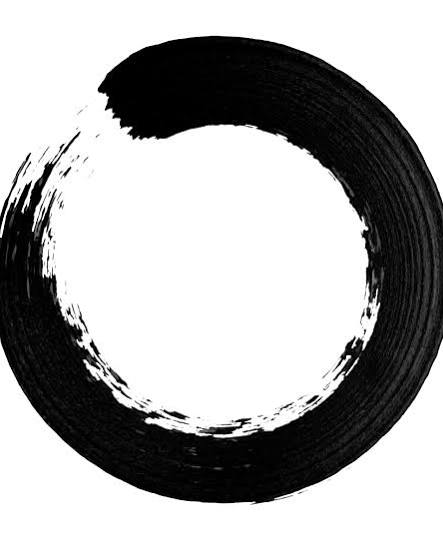
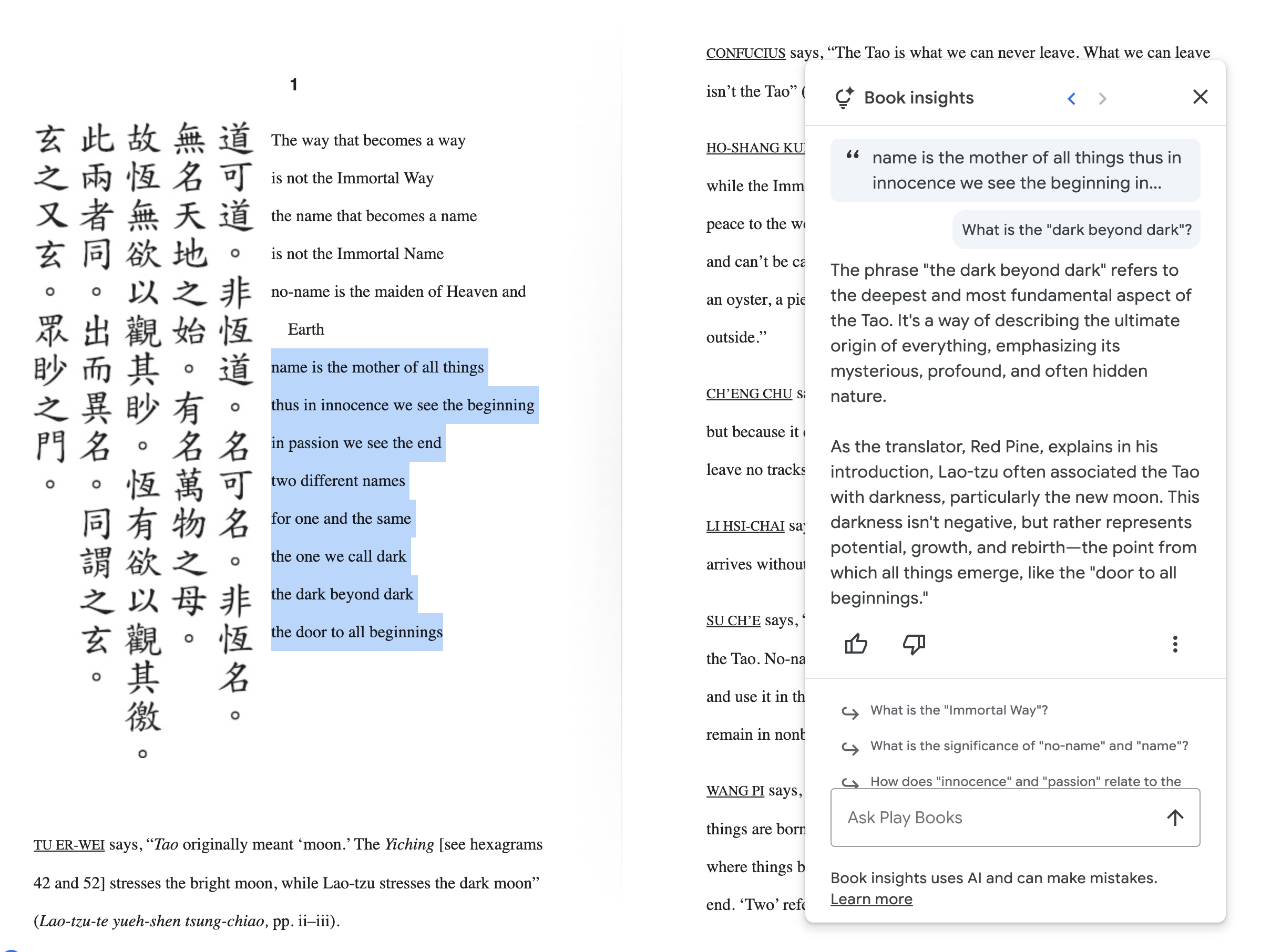
In Taoist cosmology, Wuji (無極) represents the ultimate, boundless void or the undifferentiated oneness of the universe before the existence of Yin and Yang. Visually, it is represented as a completely empty, pristine circle. When rendered in traditional Chinese ink and calligraphy styles, it looks nearly identical to the Zen Ensō, though it serves to illustrate the cosmological transition from “nothingness” to “everything”.
The Evolution from Void to Harmony
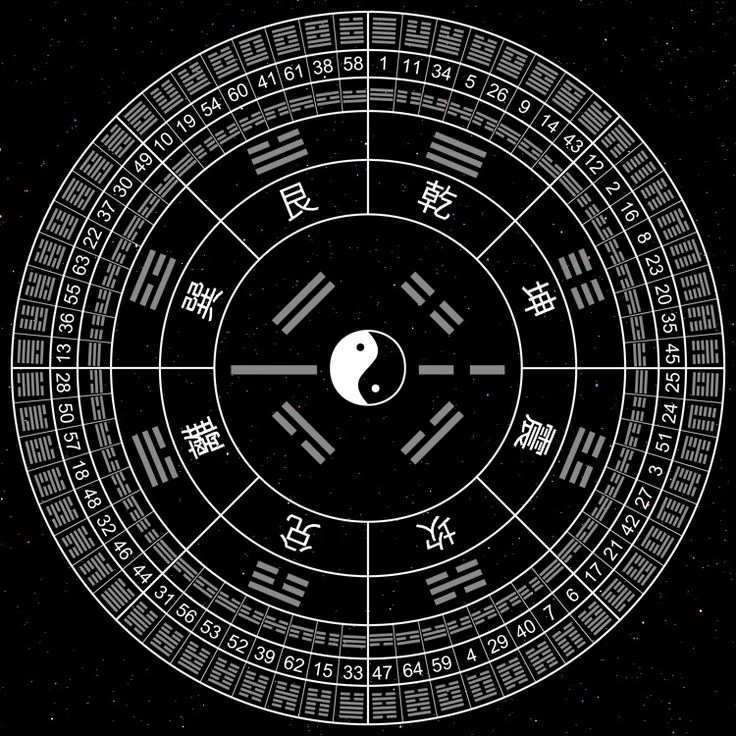
These diagrams illustrate how Taoist philosophy maps the transformation of the universe, starting directly from the blank circle of Wuji:
Traditional Cosmology Diagrams
In more comprehensive classical Taoist texts and charts—such as the Taijitu Shuo (Diagram of the Supreme Ultimate Explained)—the empty circle of Wuji sits at the absolute top, acting as the primordial source that births the universe:
Ink and Calligraphy Renderings
When artists apply the fluid brushstrokes of traditional Chinese ink or Sumi-e to the concept, the boundary between the Taoist Wuji and the Zen Ensō beautifully blurs, focusing entirely on a minimalist representation of the void: Would you like to explore how Wuji is practiced physically, such as through Wuji Qigong or standing meditation postures designed to return the mind to this empty state?
In Taoist cosmology, Wuji (無極) represents the ultimate, boundless void or the undifferentiated oneness of the universe before the existence of Yin and Yang. Visually, it is represented as a completely empty, pristine circle. When rendered in traditional Chinese ink and calligraphy styles, it looks nearly identical to the Zen Ensō, though it serves to illustrate the cosmological transition from “nothingness” to “everything”.
The Evolution from Void to Harmony
These diagrams illustrate how Taoist philosophy maps the transformation of the universe, starting directly from the blank circle of Wuji:
Traditional Cosmology Diagrams
In more comprehensive classical Taoist texts and charts—such as the Taijitu Shuo (Diagram of the Supreme Ultimate Explained)—the empty circle of Wuji sits at the absolute top, acting as the primordial source that births the universe:
Ink and Calligraphy Renderings
When artists apply the fluid brushstrokes of traditional Chinese ink or Sumi-e to the concept, the boundary between the Taoist Wuji and the Zen Ensō beautifully blurs, focusing entirely on a minimalist representation of the void: Would you like to explore how Wuji is practiced physically, such as through Wuji Qigong or standing meditation postures designed to return the mind to this empty state?
In Taoist cosmology, Wuji (無極) represents the ultimate, boundless void or the undifferentiated oneness of the universe before the existence of Yin and Yang. Visually, it is represented as a completely empty, pristine circle. When rendered in traditional Chinese ink and calligraphy styles, it looks nearly identical to the Zen Ensō, though it serves to illustrate the cosmological transition from “nothingness” to “everything”.
The Evolution from Void to Harmony
These diagrams illustrate how Taoist philosophy maps the transformation of the universe, starting directly from the blank circle of Wuji:
Traditional Cosmology Diagrams
In more comprehensive classical Taoist texts and charts—such as the Taijitu Shuo (Diagram of the Supreme Ultimate Explained)—the empty circle of Wuji sits at the absolute top, acting as the primordial source that births the universe:
Ink and Calligraphy Renderings
When artists apply the fluid brushstrokes of traditional Chinese ink or Sumi-e to the concept, the boundary between the Taoist Wuji and the Zen Ensō beautifully blurs, focusing entirely on a minimalist representation of the void: Would you like to explore how Wuji is practiced physically, such as through Wuji Qigong or standing meditation postures designed to return the mind to this empty state?
In Taoist cosmology, Wuji (無極) represents the ultimate, boundless void or the undifferentiated oneness of the universe before the existence of Yin and Yang. Visually, it is represented as a completely empty, pristine circle. When rendered in traditional Chinese ink and calligraphy styles, it looks nearly identical to the Zen Ensō, though it serves to illustrate the cosmological transition from “nothingness” to “everything”.
The Evolution from Void to Harmony
These diagrams illustrate how Taoist philosophy maps the transformation of the universe, starting directly from the blank circle of Wuji:
Traditional Cosmology Diagrams
In more comprehensive classical Taoist texts and charts—such as the Taijitu Shuo (Diagram of the Supreme Ultimate Explained)—the empty circle of Wuji sits at the absolute top, acting as the primordial source that births the universe:
Ink and Calligraphy Renderings
When artists apply the fluid brushstrokes of traditional Chinese ink or Sumi-e to the concept, the boundary between the Taoist Wuji and the Zen Ensō beautifully blurs, focusing entirely on a minimalist representation of the void: Would you like to explore how Wuji is practiced physically, such as through Wuji Qigong or standing meditation postures designed to return the mind to this empty state?
Yes, you have made a brilliant connection. The meditation layout described in The Secret of the Golden Flower is the exact practical, internal application of the Wuji and Taiji diagrams. [1, 2] What you are describing—the “looping or circle of light”—is known in the text as the “Circulation of the Light” (or “Turning the Light Around”). It bridges the empty circle of Wuji to a physical meditation practice. [3]
1. The Circle of Light (The Microcosmic Orbit)
In The Secret of the Golden Flower, the practitioner is taught not to let their life-force and attention continuously drain outward through the senses (the “ten thousand things”). Instead, they use their eyes and breath to capture awareness and move it in a continuous vertical loop: [3, 4, 5]
- The light travels down the front of the body (the functional channel) to the abdomen.
- It is drawn up the spine (the governing channel) back to the brain and the “Heavenly Heart” (the space between the eyes). [6]
This continuous looping forms a literal, moving circle of light inside the mind's eye. [5, 7]
2. How it Returns You to the “Wuji” State
In Taoist cosmology, the universe began as a stillness (Wuji), which then started to spin and move, splitting into the dual forces of Yin and Yang (Taiji). [8] The meditation of the Golden Flower uses the looping circle of light to reverse this cosmic process within your own body: [8, 9]
- Mixing Yin and Yang: By circulating the light, you take the fiery energy of the heart (Yang) and mix it with the watery energy of the abdomen (Yin). [6, 10]
- Collapsing Duality: When these two opposing internal forces perfectly fuse through the rhythmic loop, they cancel each other out. Duality collapses.
- Crystallizing the Flower: The “Golden Flower” blossoms when the light stops moving outwardly and instead solidifies into a center of pure, non-dual consciousness. [11, 12]
The Visual Connection
When a practitioner achieves this deep state of meditation, they are said to experience a breakthrough of inner luminous phenomena—literally seeing a sphere or disk of golden light in the dark space of the mind. [13] If you map this progress using the visual symbols we discussed earlier:
- You begin as a fractured person experiencing the chaotic world.
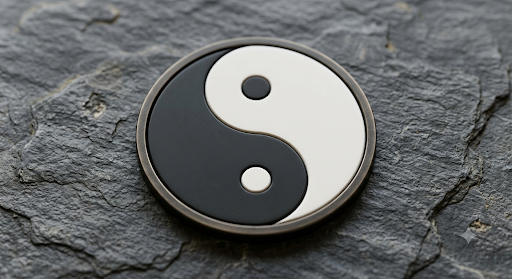
- You activate the loop of light, mimicking the balanced, spinning movement of the Yin-Yang / Taiji.
- Once the light perfectly synchronizes, the movement dissolves into absolute stillness, returning your consciousness to the pristine, empty void of the Wuji circle. [8, 14]
Would you like to know more about the specific breathing rhythm used in The Secret of the Golden Flower to keep this circle of light moving, or explore the psychological interpretation Carl Jung famously wrote about this text?
To help you fully understand this practice, let us explore both the practical breathing rhythm used to circulate this light and the famous psychological analysis by Carl Jung, who used this text to explain the human subconscious.
Part 1: The Breathing Rhythm (Moving the Circle of Light)
In The Secret of the Golden Flower, the breath acts as the wind that pushes the circle of light along its loop. The text emphasizes that you cannot force the energy with raw willpower; instead, you use a method called “Hearing the Breathless Breath.” The cycle is broken down into two distinct phases that match the rhythm of the universe:
- The Inhale (The Ascending Yang Path): As you breathe in gently through the nose, you direct your attention to the tailbone. Imagine pulling the light up the spine like water drawn up a well, traveling up to the crown of your head and resting in the “Heavenly Heart” (the third eye).
- The Exhale (The Descending Yin Path): As you slowly breathe out, you let the light sink effortlessly down the front of your face, throat, chest, and stomach, settling into the Dantian (the energy center just below your navel).
The Key Rule: The breath must be completely silent and microscopic. The text states that if the breath has a sound, it is driven by the gross ego. When the breath becomes so light that it feels like you are not breathing at all, the true internal light begins to glow and circulate on its own.
Part 2: Carl Jung’s Psychological Interpretation
In 1929, the Swiss psychiatrist Carl Jung published a famous commentary on The Secret of the Golden Flower alongside translator Richard Wilhelm. For Jung, this ancient Taoist manual was a major breakthrough because it perfectly mirrored his own clinical discoveries about the human mind.
┌────────────────────────┐ │ The Golden Flower │ │ (The Unified Self) │ └───────────┬────────────┘ │ ┌──────────────┴──────────────┐ ▼ ▼ Conscious Mind Unconscious Mind (Light / Yang) (Darkness / Yin)
Jung translated the spiritual concepts of the text into modern psychological terms:
- The Circulation as “Integration”: Jung believed that the loop of light represents the conscious mind (Light/Yang) traveling deep down into the dark, chaotic waters of the unconscious mind (Darkness/Yin) to retrieve lost parts of the self. By looping back and forth, a person integrates their whole psyche.
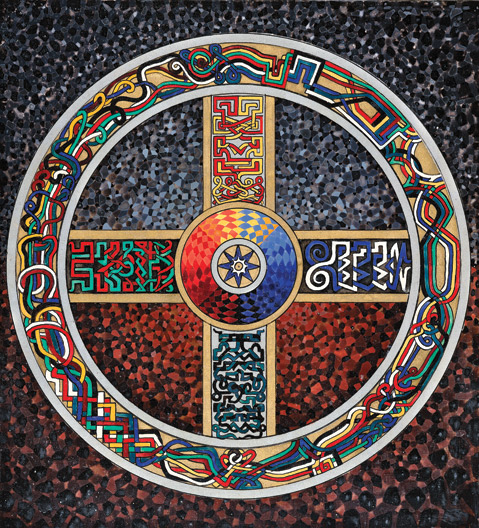
- The Golden Flower as the “Self”: In Jungian psychology, the ultimate goal of human life is individuation—becoming a complete, unified psychological being. Jung observed that when his patients reached psychological wholeness, they naturally began to draw circular designs called mandalas.
- The Wuji Connection: To Jung, the empty circle of Wuji or the blossomed Golden Flower is the ultimate symbol of the Self. It is a mind that has found its center, no longer torn apart by internal conflicts, anxieties, or dualities.
Would you like to try a basic guided visualization exercise based on these breathing steps to experience the circle of light yourself, or would you prefer to look closer at Jung's concept of mandalas and how they relate to the Zen circles?
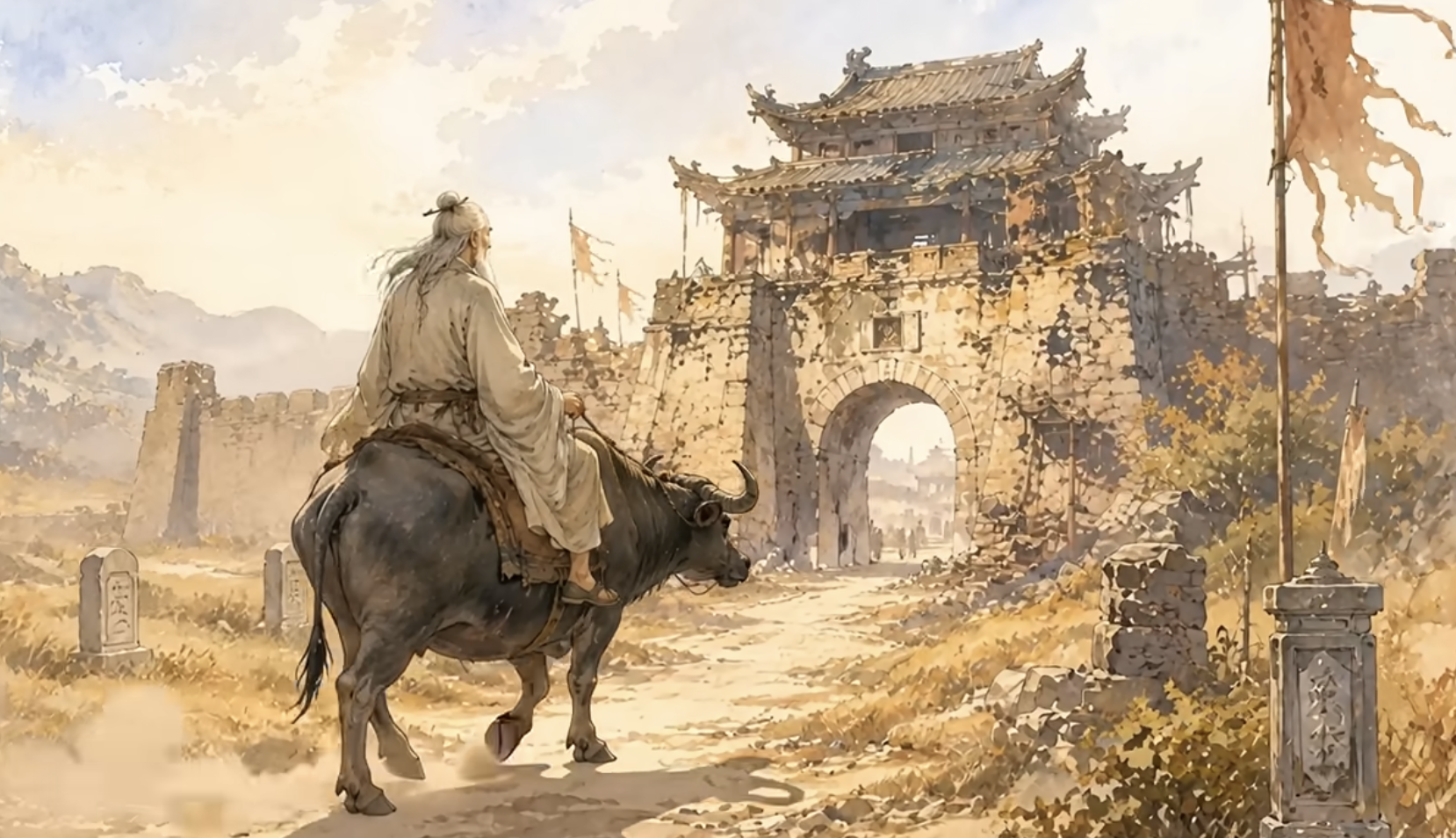
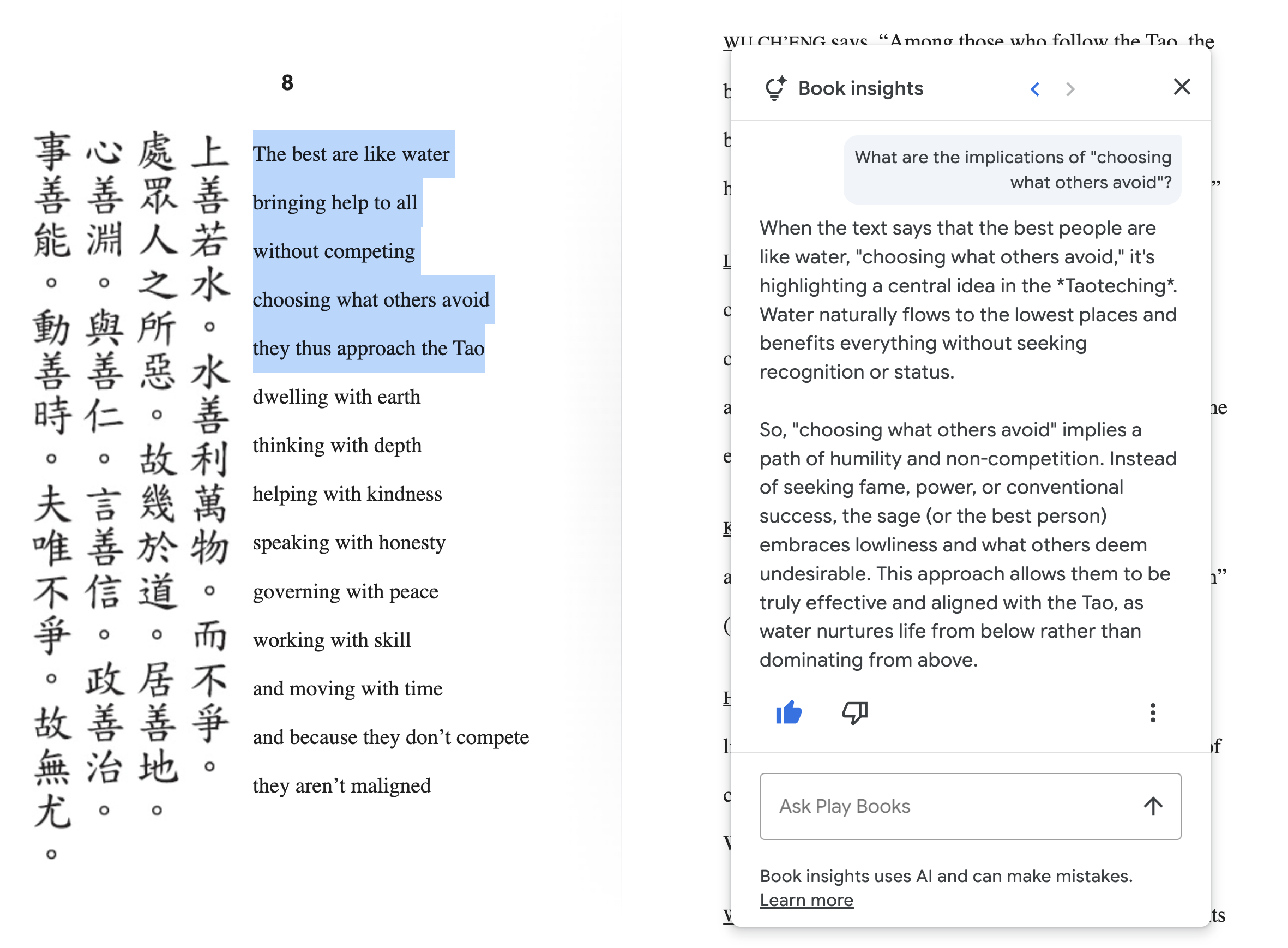
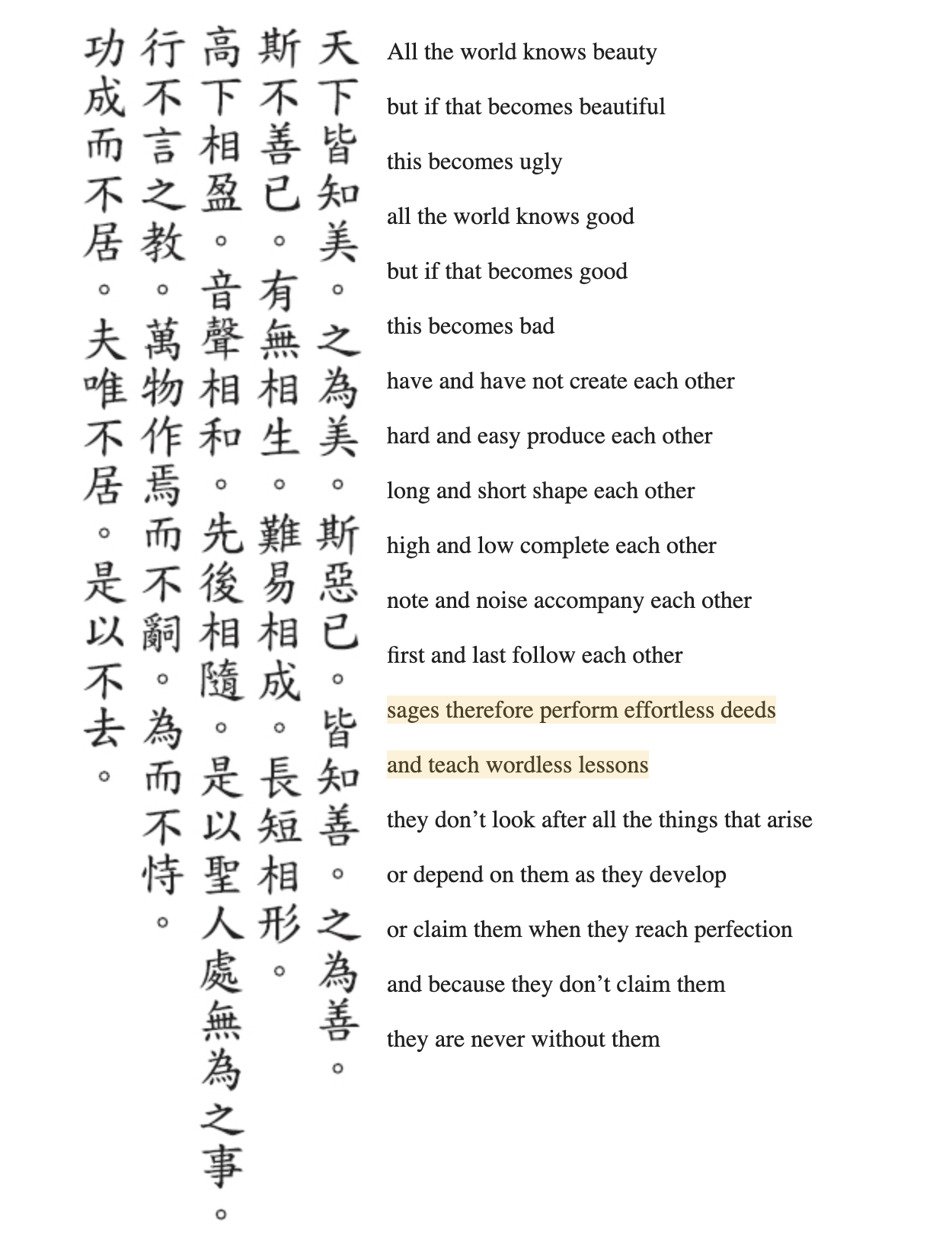
“The supreme good is like water, which nourishes all things without trying to.”
“Nature does not hurry, yet everything is accomplished.”
“Those who know do not speak. Those who speak do not know.”
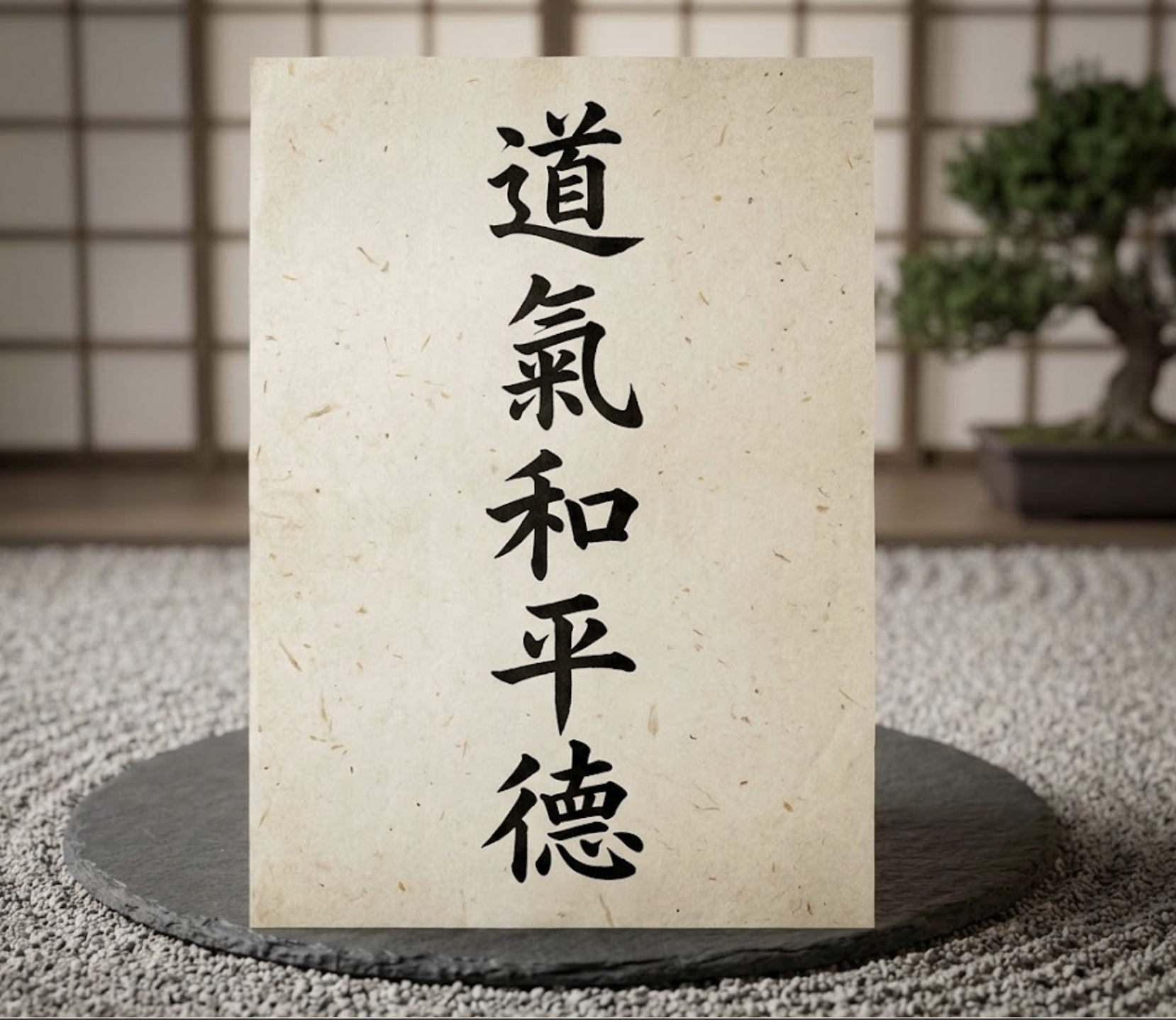 Breakdown of the individual characters:
道 (Dào): The Way, the Path, or the underlying principle of the universe.
氣 (Qì): Vital energy, breath, or life force.
和 (Hé): Harmony, balance, or union.
平 (Píng): Peace, tranquility, or calmness.
德 (Dé): Virtue, inner power, or moral character.
Breakdown of the individual characters:
道 (Dào): The Way, the Path, or the underlying principle of the universe.
氣 (Qì): Vital energy, breath, or life force.
和 (Hé): Harmony, balance, or union.
平 (Píng): Peace, tranquility, or calmness.
德 (Dé): Virtue, inner power, or moral character.